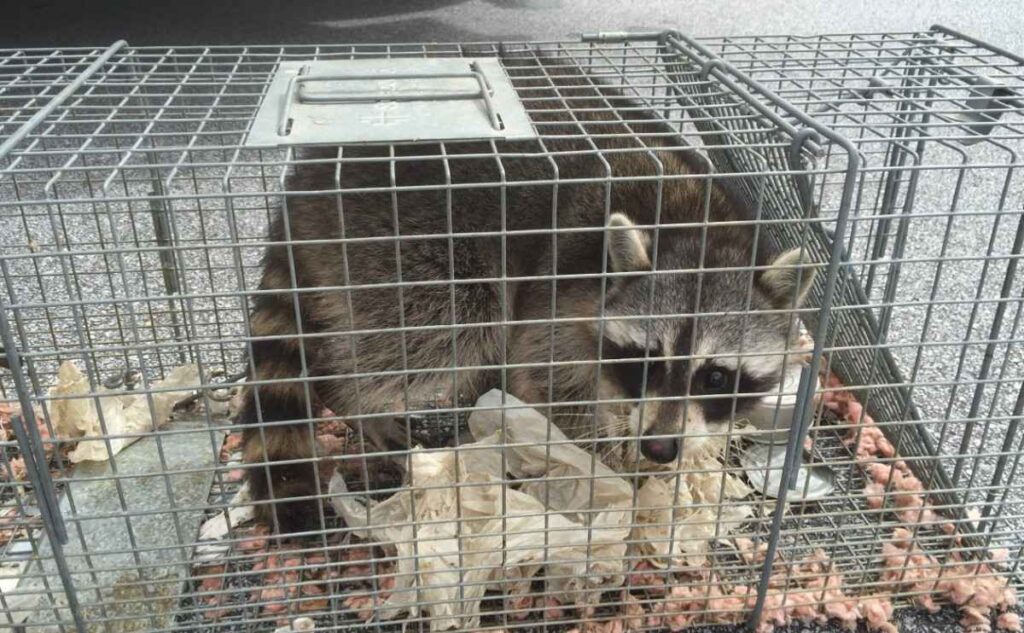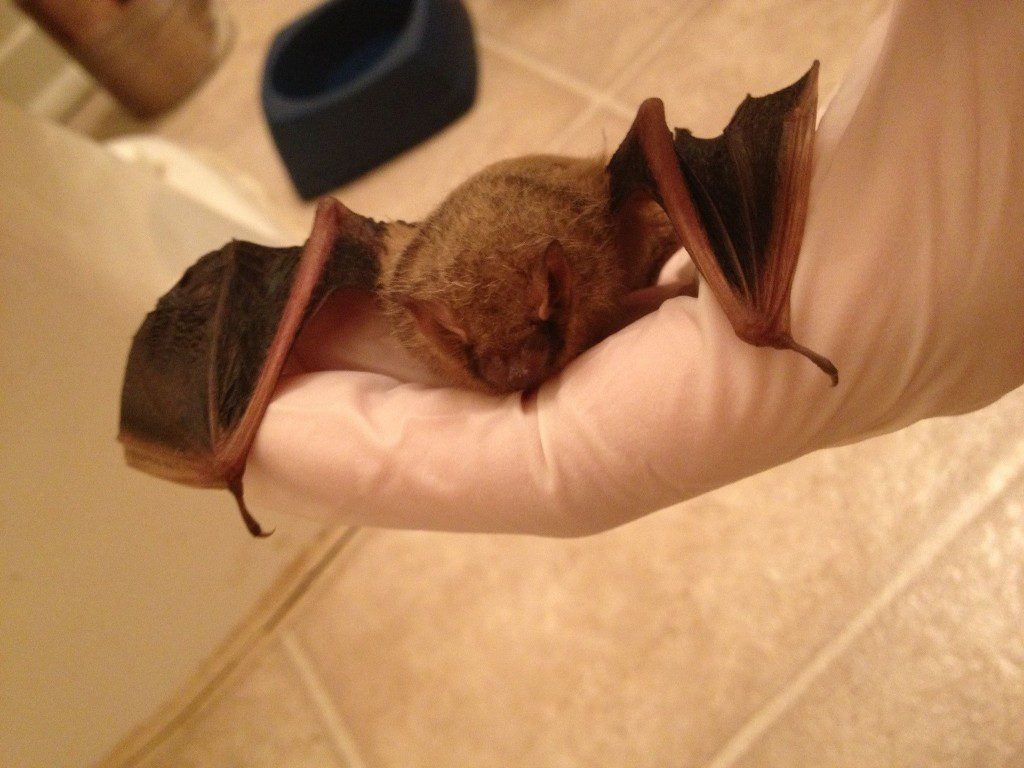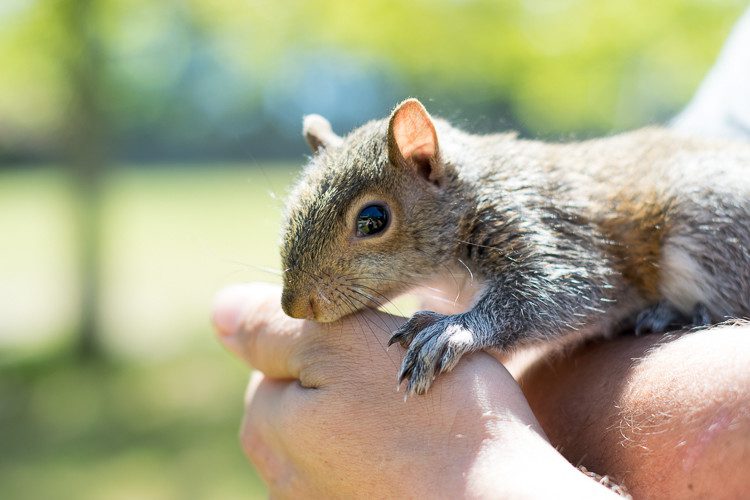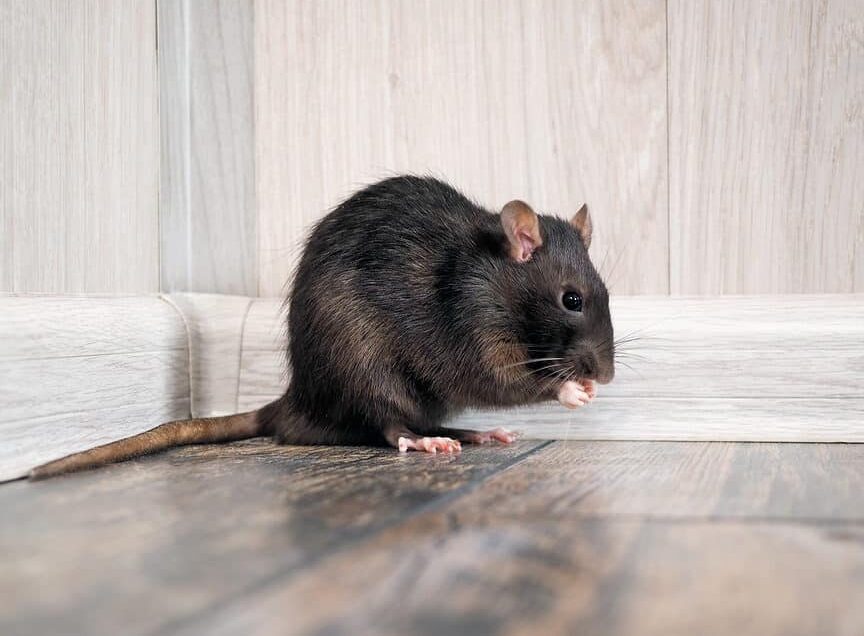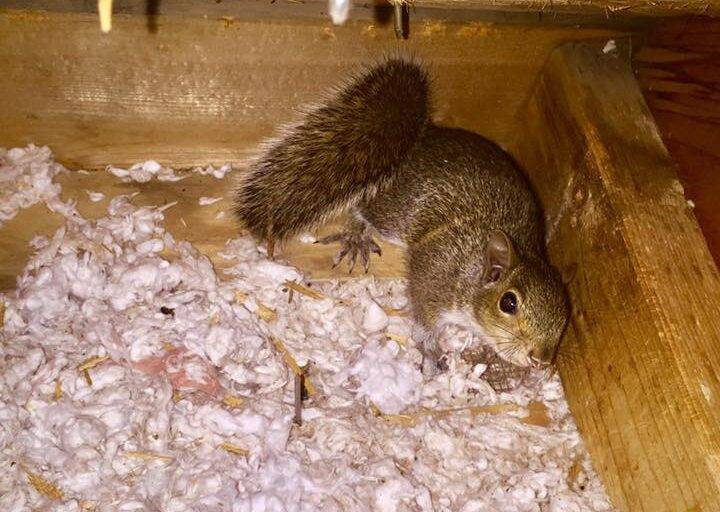
If you’re wondering what animals commonly live in attics, the most likely possibilities include squirrels, raccoons, bats, rats, mice, and birds. These animals may enter homes through roofline gaps, damaged vents, soffits, or other exterior openings. According to UGA Extension, recognizing wildlife activity patterns and signs of damage can help homeowners identify the animals using their attics.
Attics are attractive to wildlife because they offer a quiet, sheltered space away from weather and predators. Depending on the species, an animal may use the attic for resting, nesting, or raising young. Because different animals behave differently, recognizing the sounds, activity patterns, and signs they leave behind can help homeowners understand what may be living overhead and determine what needs to be addressed.
What Animals Commonly Live in Attics?
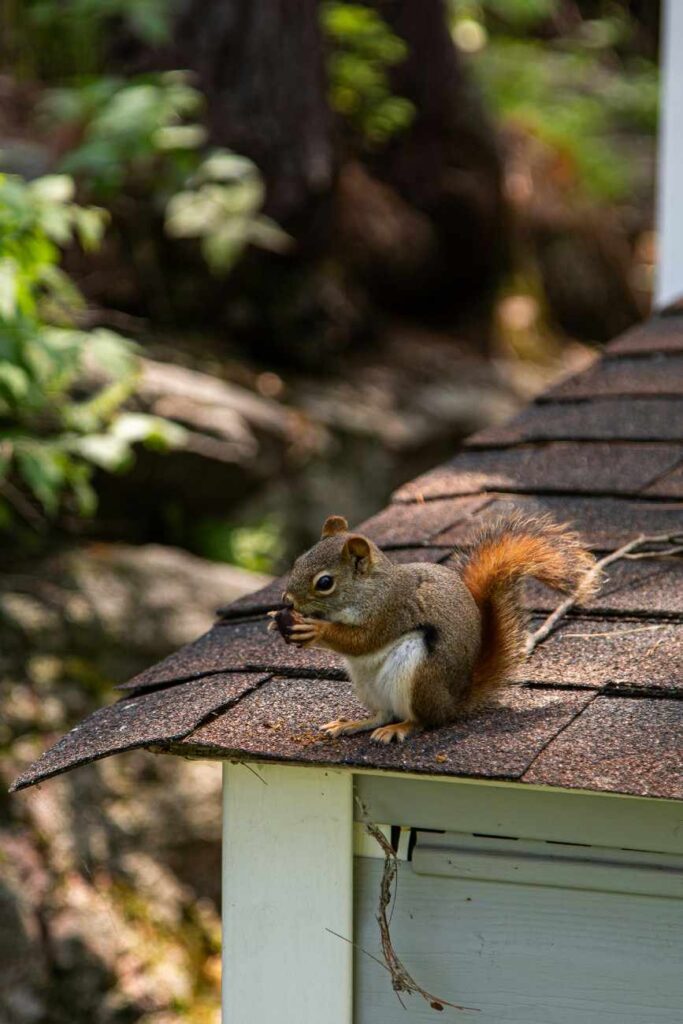
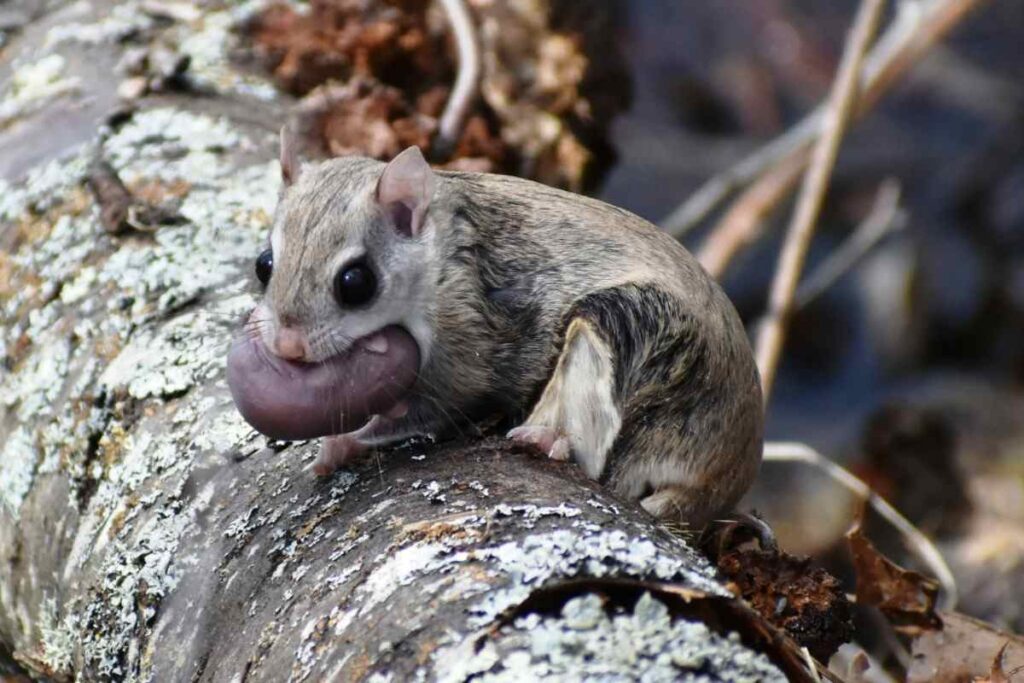
Squirrels
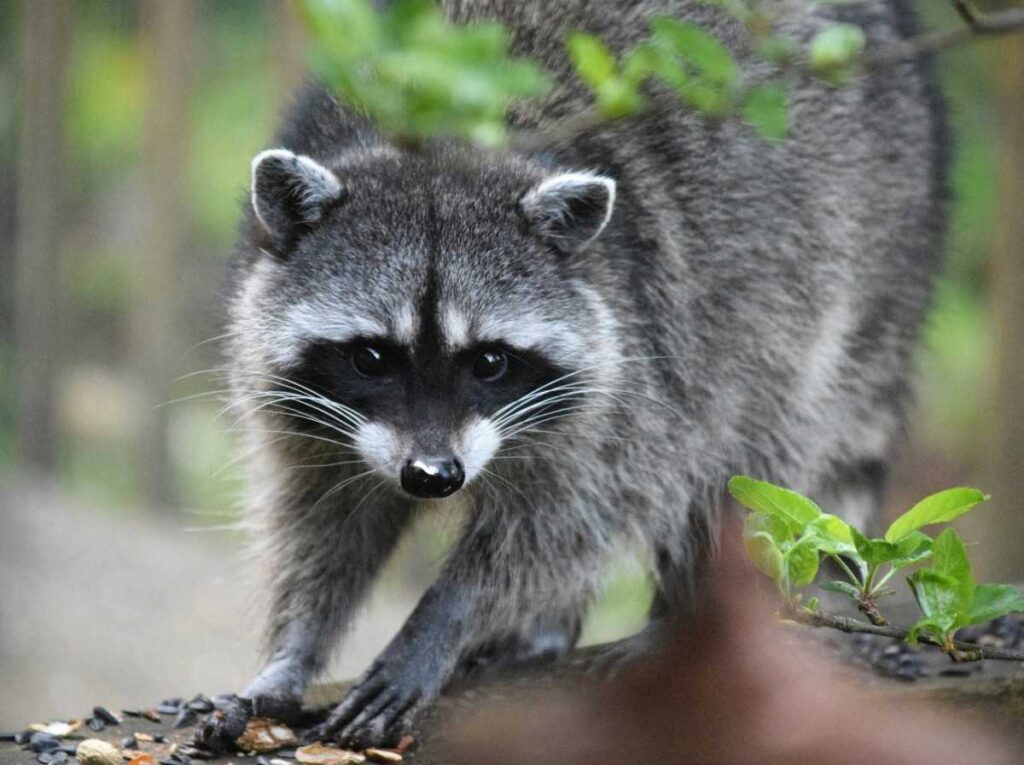
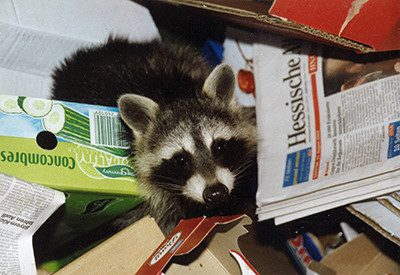
Raccoons
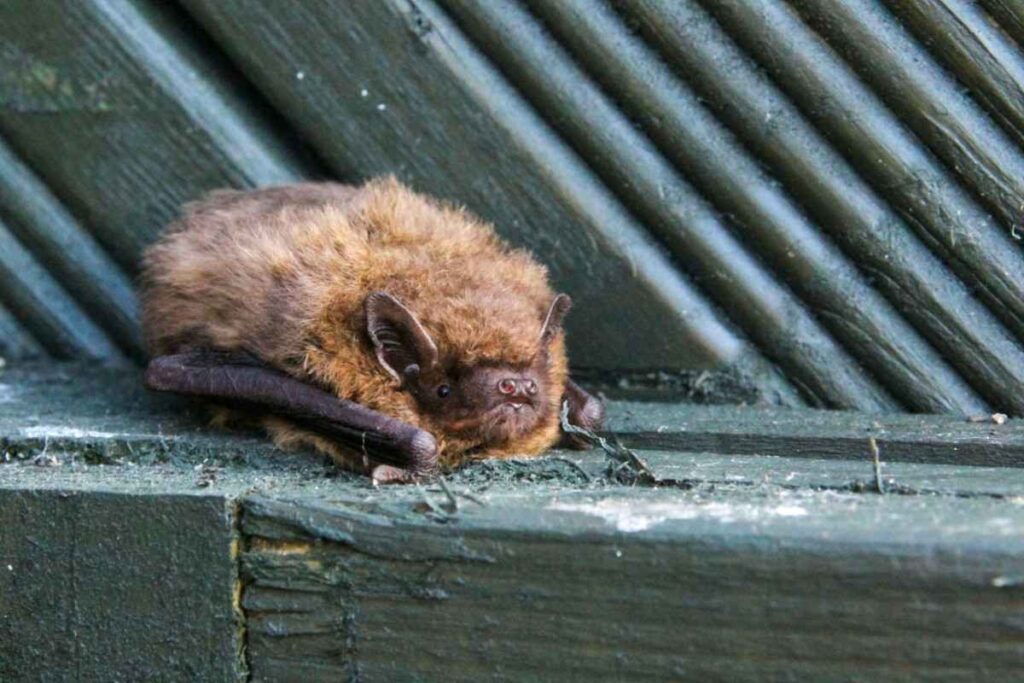
Bats
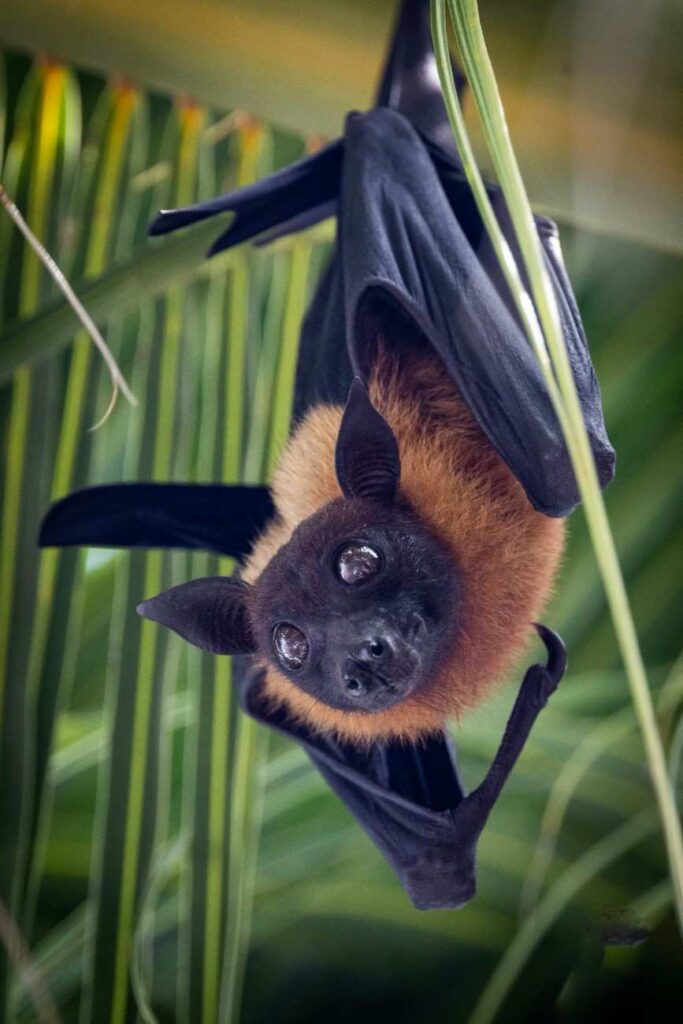
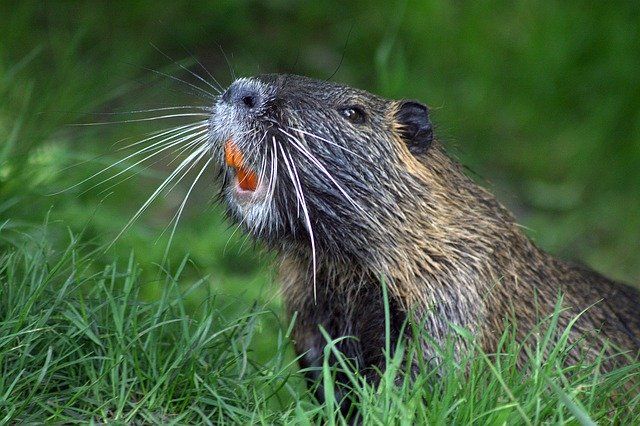
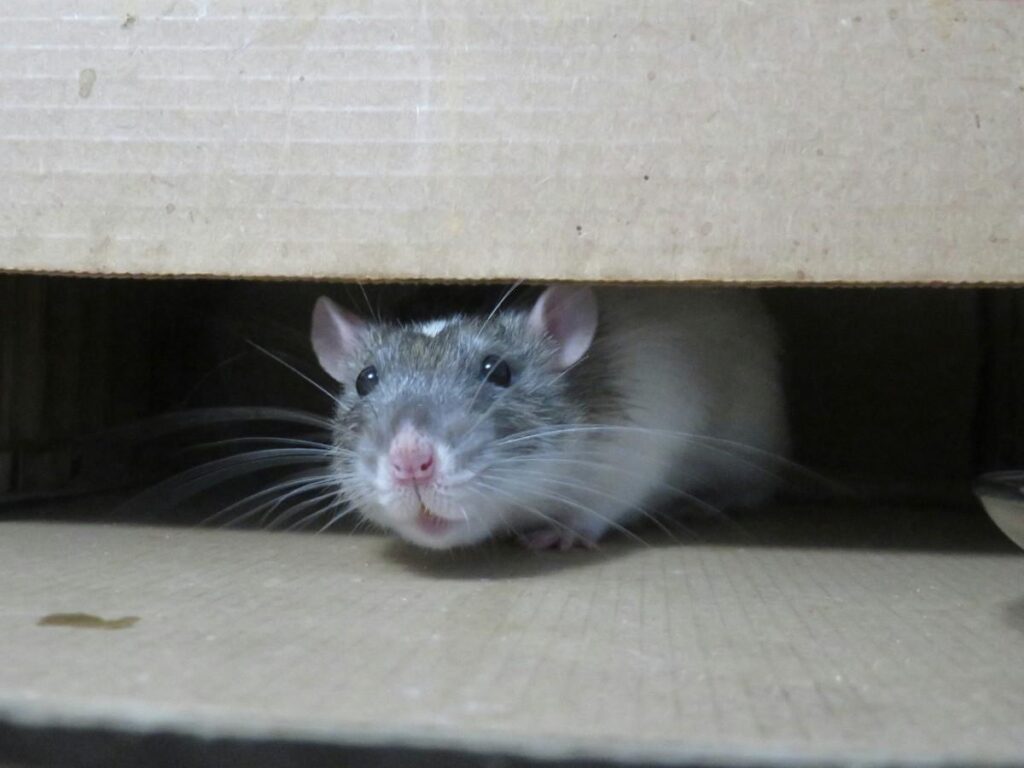
Rats & Mice
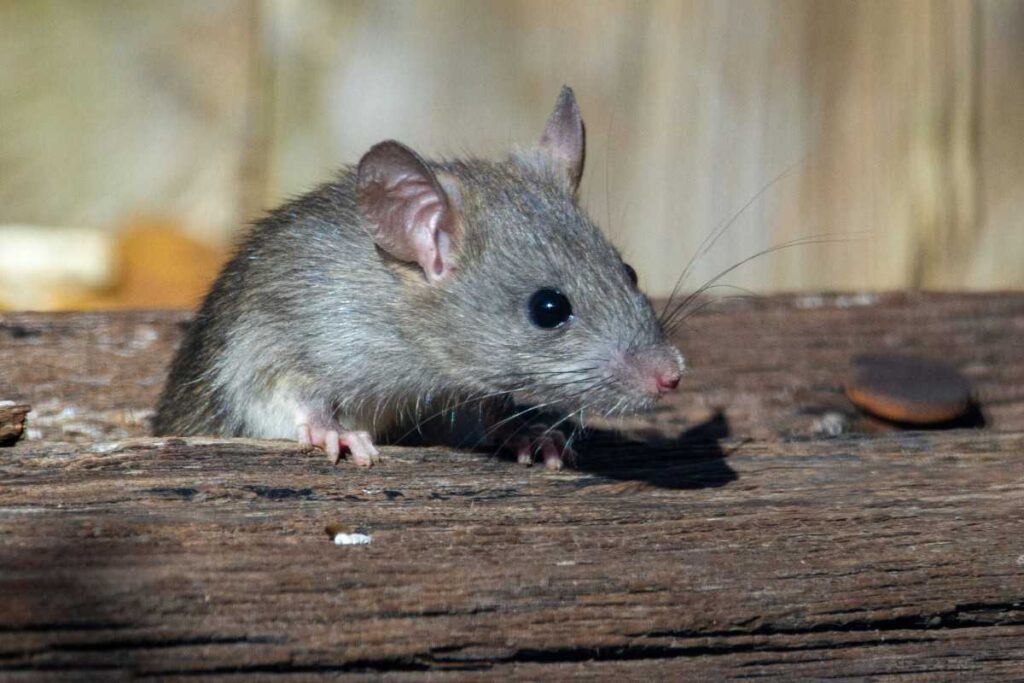
Birds
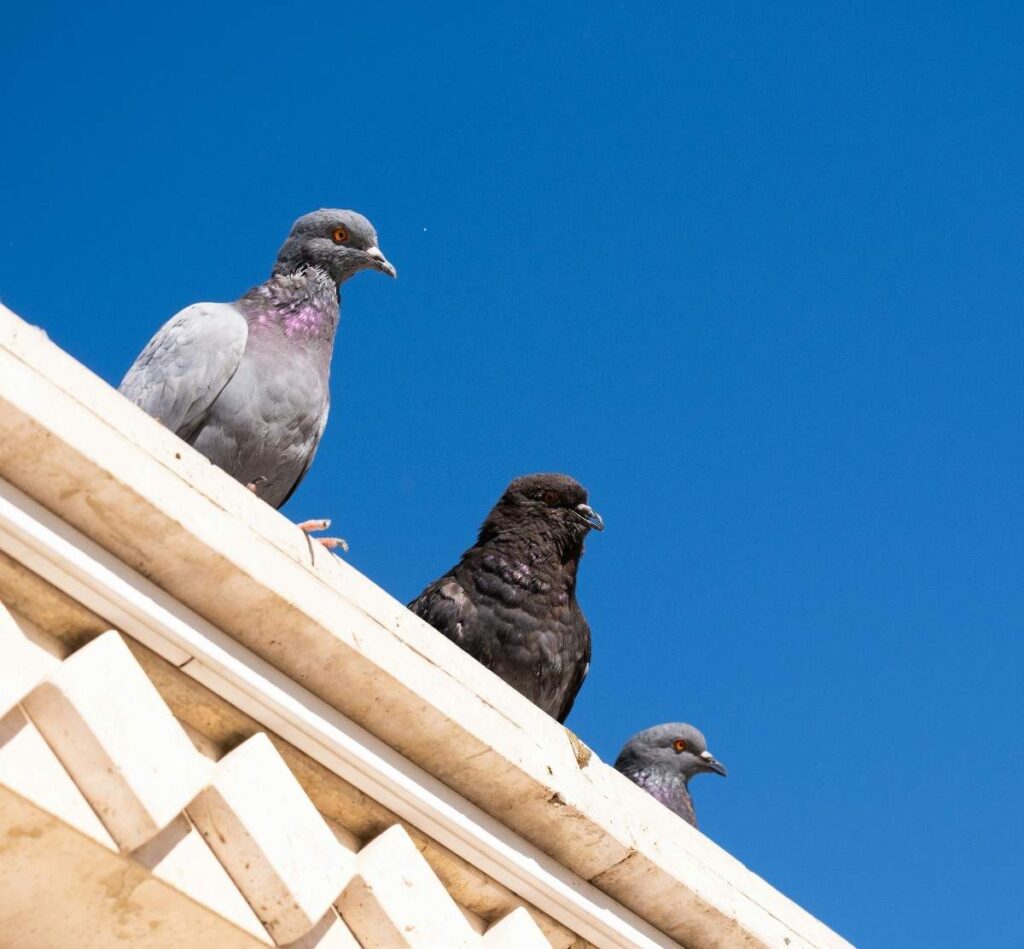
What Signs Indicate Animals Commonly Live in Attics?
Recognizing what animals commonly live in attics can help homeowners understand unusual sounds and identify possible wildlife activity. However, noise alone cannot reliably confirm which animal is present. Consider the time of activity, the type of sound, and any physical evidence found in the attic.
Common signs include:
- Daytime running or scratching: Squirrels are a common possibility.
- Nighttime movement: Raccoons, rats, mice, bats, and other nocturnal wildlife may be involved.
- Fluttering or chirping: Birds or bats may be using an attic opening.
- Gnaw marks: Squirrels and rodents can both chew materials.
- Droppings or nesting material: These can confirm wildlife activity, although they may not identify the species on their own.
The UGA Cooperative Extension guide to resolving nuisance wildlife conflicts explains how activity patterns and signs of damage can help homeowners assess wildlife problems around their properties.
Why Do Animals Enter Attics?
For wildlife, an attic can provide many of the conditions they need to survive. It is generally protected from rain, wind, and extreme temperatures while also offering secluded areas where animals can rest or raise young.For animals commonly living in attics, these sheltered spaces can provide suitable places to rest, hide, or raise young.
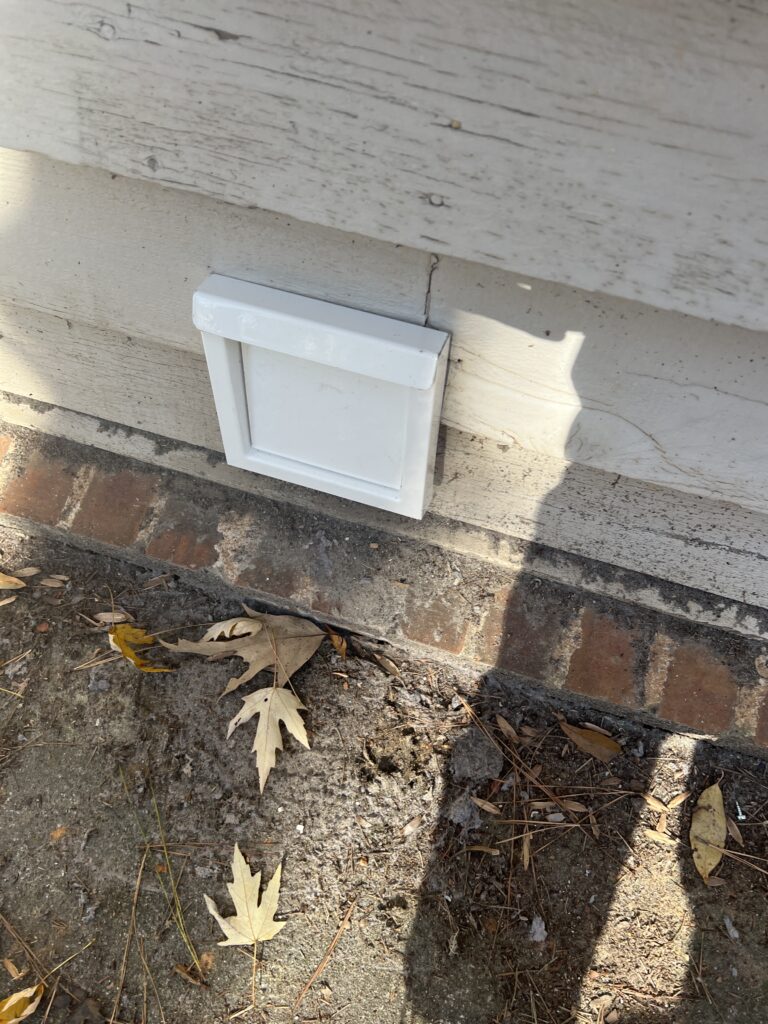
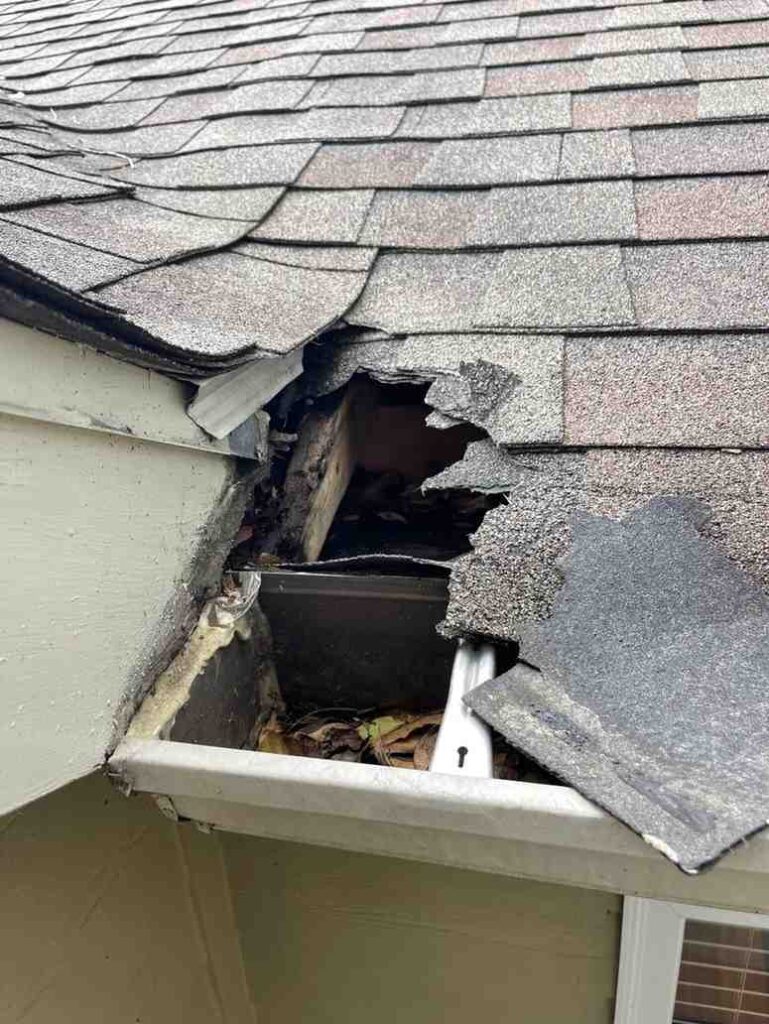
Animals may find their way inside through damaged vents, loose soffits, roofline gaps, uncapped or damaged chimney areas, and openings around utility lines. A small exterior defect can therefore become an entry point, particularly when it provides easy access to a warm or protected space.
Once wildlife discovers a suitable entry point, the same opening may be used repeatedly. That is why identifying how an animal entered the home is an important part of addressing an attic wildlife problem.
What Should You Do If You Find Wildlife in the Attic?
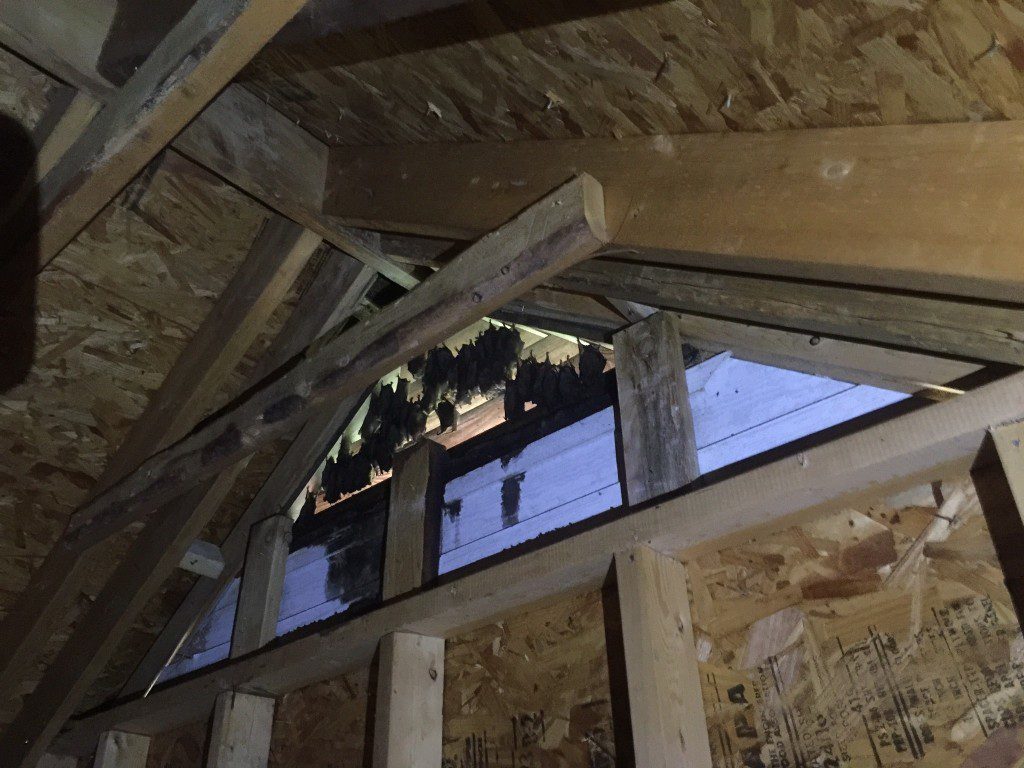
If you discover an animal in your attic, avoid direct contact. Do not corner, grab, or attempt to handle wildlife, particularly bats or animals that appear sick, injured, or unusually aggressive.
First, try to determine where the animal is entering and whether it may still be inside. Do not immediately seal an opening if an animal or dependent young could be inside. Closing an entry point too soon can trap wildlife inside the structure.
A proper wildlife solution should account for the species, its location, possible young, and the entry point. Once the animal has been appropriately removed or excluded, vulnerable openings can be secured to reduce the likelihood of another intrusion. Learn more about A&A’s wildlife removal services and exclusion approach.
For bats, timing is also important. Before arranging exclusion, review the Georgia Department of Natural Resources’ bat guidance for information on protecting bats and following applicable recommendations.
How to Prevent Wildlife From Entering Your Attic
Preventing attic wildlife starts with keeping the exterior of the home in good condition. Regularly inspect areas where the roof, walls, vents, and utility penetrations meet.
Pay particular attention to:
- Loose or damaged soffits and fascia
- Broken or poorly screened attic vents
- Gaps around pipes, cables, and utility lines
- Damaged chimney areas
- Roofline gaps and deteriorated roofing materials
- Openings around gable vents
- Tree limbs that provide wildlife access to the roof
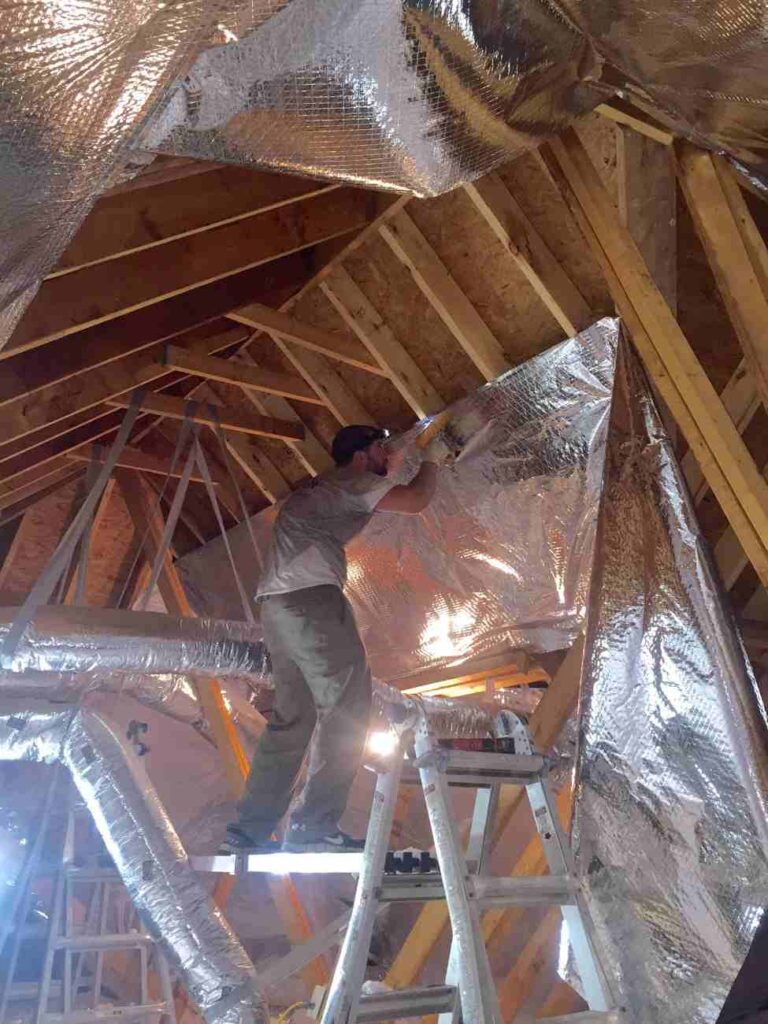
It is also helpful to inspect the attic periodically for droppings, nesting material, disturbed insulation, unusual odors, or gnaw marks. Finding these signs early can make it easier to address an entry problem before damage becomes more extensive.
When Should You Call a Wildlife Professional?
If you repeatedly hear movement overhead, discover an animal, find significant damage, or suspect that young animals may be present, a professional inspection can help determine the appropriate next step.
Wildlife control is not simply about getting an animal out of the attic. The entry point and any resulting damage also need attention to reduce the chance of another animal using the same opening.
A&A Wildlife & Home Solutions helps homeowners identify wildlife activity, locate potential entry points, and address affected areas. Explore our squirrel removal services to learn more about addressing squirrel-related problems around your home.
Frequently Asked Questions
What animals commonly live in attics?
Common attic wildlife can include squirrels, raccoons, bats, rats, mice, and birds. The species found in a particular home depends on available entry points, habitat, and shelter conditions.
What animal makes scratching noises in the attic at night?
Nighttime scratching can come from rats, mice, raccoons, bats, or other nocturnal wildlife. The sound alone is not enough to identify the animal reliably. Activity patterns and physical signs should also be considered.
Can more than one type of animal live in an attic?
Yes. Different species may use the same structure when suitable entry points are available. If you notice different types of sounds or signs, a thorough inspection can help determine whether multiple animals are present.
Should I seal an attic opening after finding wildlife?
Not until you are sure the animal and any dependent young are no longer inside. Sealing an opening too early can trap wildlife inside the home. The correct exclusion approach depends on the species and circumstances.
Protect Your Attic From Wildlife
If you suspect an animal is living above your ceiling, identifying what is there and how it got inside is an important first step. Addressing the entry point can help prevent the same problem from happening again.
A&A Wildlife & Home Solutions helps Georgia homeowners identify wildlife activity, address entry points, and restore areas affected by unwanted animals.